Redesigning outbound sourcing to surface underserved talent to recruiters
Project Summary
Context
Untapped’s mission is to broaden access to transformative careers by connecting companies with underserved talent. In 2022, our goal was to become the go-to platform for equitable hiring—offering transparency for job seekers and high-quality access for recruiters.
Problem
The outbound sourcing experience wasn’t delivering value. Recruiters struggled to find relevant candidates due to a lack of ranking logic and limited visibility into candidate profiles. Filters and search results didn’t provide enough signal to confidently assess talent, leading to low engagement.
Solution
We redesigned outbound sourcing through a phased approach to quickly deliver value. As Sr. Director of Product & Design, I led a ground-up overhaul focused on surfacing the most relevant, underrepresented candidates—shipping incremental improvements while building toward a more intelligent, scalable sourcing experience.
Outcomes
⚡️ 7x performance and stability
💌 10x engagement rate within the marketplace
🐞 80% reduction in bugs on the marketplace reported by customers YoY
Team
Head of Engineering, 2x Sr. Product Designers, 2x Product Manager, 6x IC Engineers
Role
Senior Director, Head of Product and Design
Understanding the Recruiter Workflow

There are two main ways to recruit talent. This project focused on improving the outbound recruiting experience.
1️⃣ Inbound Recruiting
Job seekers apply to roles, and recruiters review applicants who come to them.
2️⃣ Outbound Recruiting
Recruiters proactively search for qualified candidates and reach out to invite them to interview
Why Fix the Sourcing Experience (Instead of Building New Features)
The opportunity: Hiring knowledge workers has never been harder.
During the Great Resignation, companies were hiring aggressively—but recruiters lacked the time, tools, and data to meaningfully improve representation in their day-to-day work.
Because opportunity in the U.S. has historically favored privileged groups, recruiting teams often rely on signals (schools, networks, past employers) that reinforce bias. Most lacked better data or workflows to find underserved talent at scale.
Why outbound not inbound recruiting: It was foundational.
Outbound recruiting was Untapped’s biggest lever to drive impact and growth.
Company Strategy in 2022
Helping companies proactively find underserved talent is our best opportunity to achieve our mission and win the market in 2022.
The market demanded it, competitors weren’t delivering, and qualified talent remained undiscoverable. Fixing sourcing wasn’t optional—it was foundational.
Key problems: The existing sourcing product was actively failing recruiters.
Bottom line: Until sourcing worked, nothing else mattered. Improving outbound recruiting was the prerequisite for delivering value, retaining customers, and advancing Untapped’s mission
😩 Unreliable experience
Legacy code led to a slow, buggy product that recruiters couldn’t trust—driving churn.
🔦 Low-signal search results
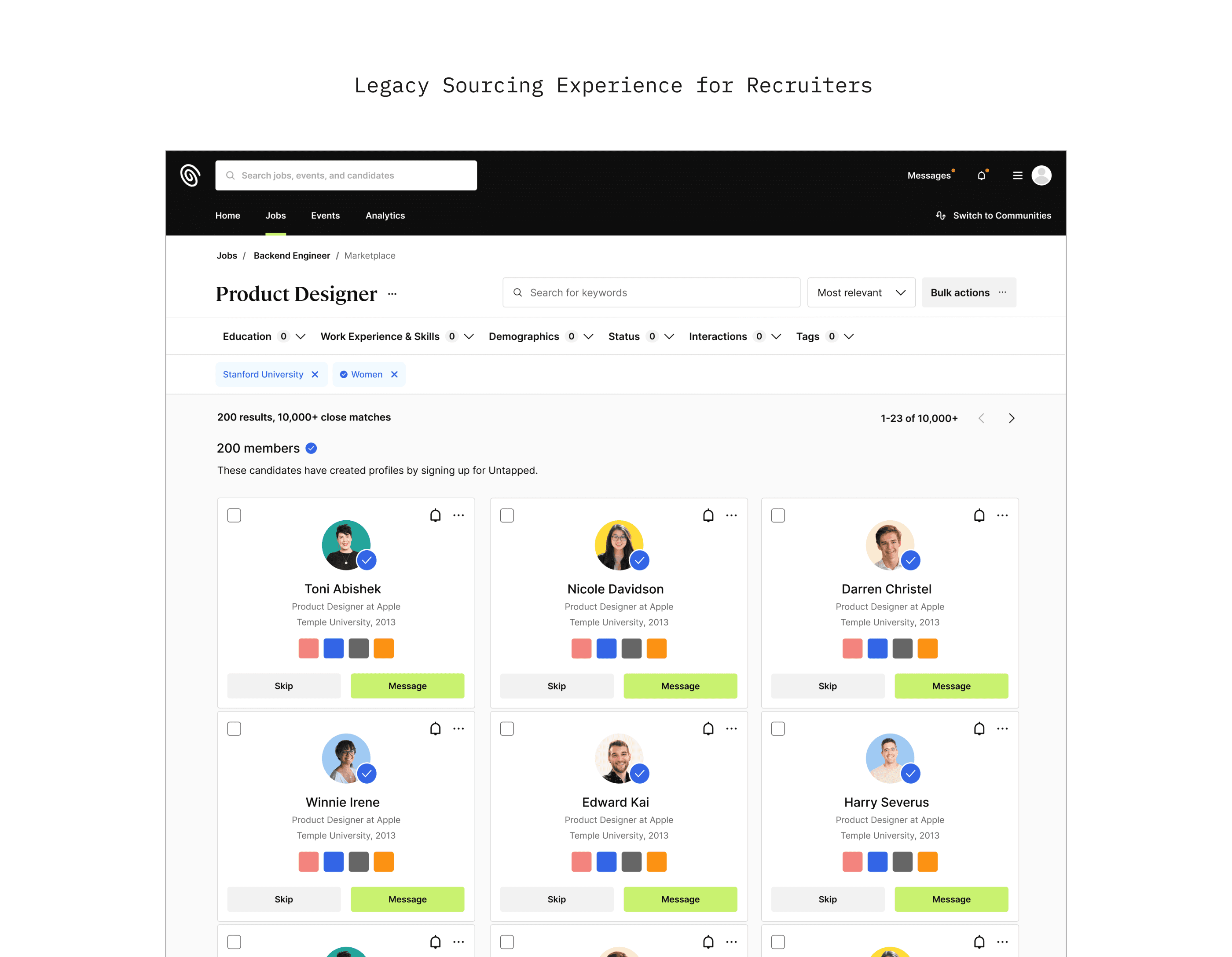
Candidate cards showed minimal, often irrelevant information, forcing excessive clicking.
🤔 Confusing filters
Inconsistent UX patterns made it unclear what filters were applied or effective
📉 No relevance or ranking
Candidates were ordered by signup date, not fit—making a 600K+ talent pool impossible to navigate.
💫 Our North Star: Marketplace Connections
More meaningful recruiter–candidate connections drive both business growth and equitable hiring. By helping recruiters find the right candidates faster, we increase engagement, message volume, and successful opportunities on Untapped.
How might we increase the number of marketplace connections in the sourcing product?
I led the creation of the company's first north star metric to unify the team against the same outcome and to easily prioritize big bets.
Marketplace Connections: A volume-based metric representing opportunities created through Untapped, measured by:
Total outbound messages sent by recruiters
Candidate engagement rate with those messages
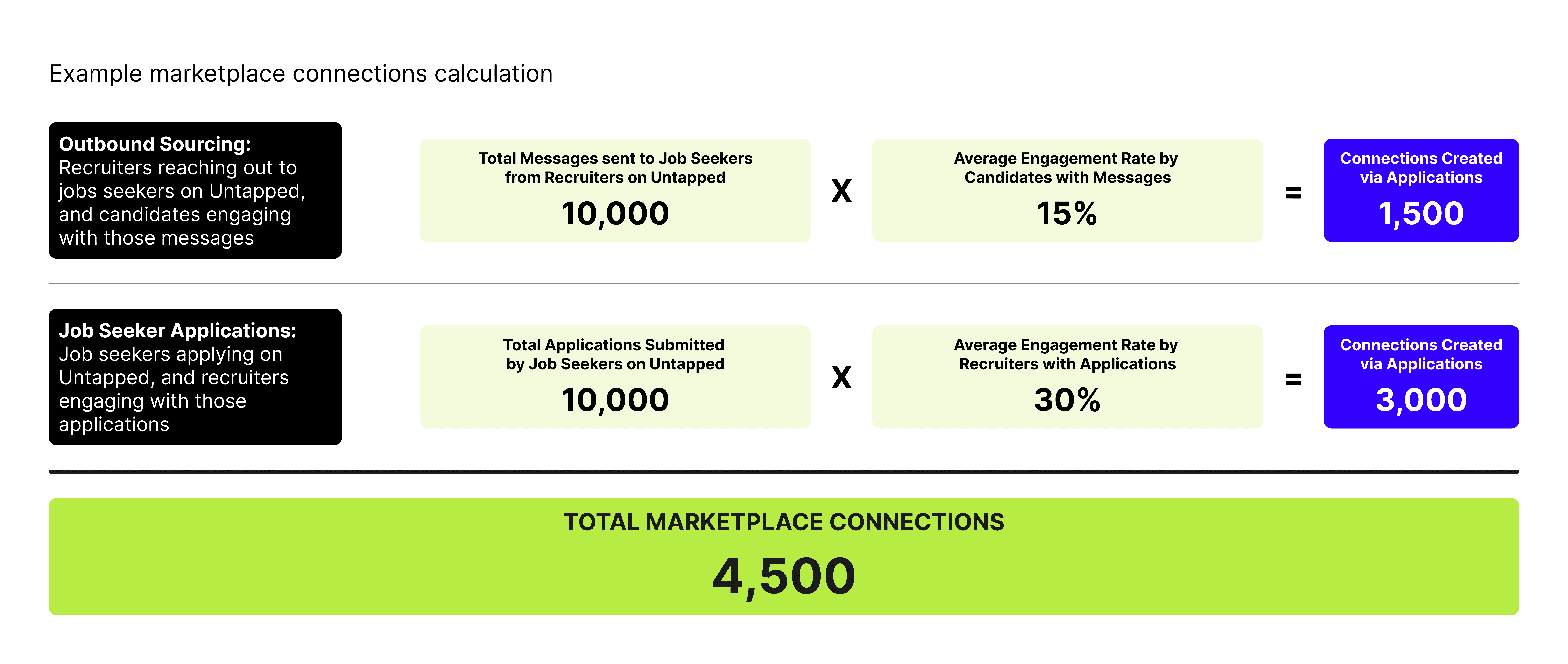
Through speaking with customers (existing and prospective), looking at product data, and understanding the competitive landscape, the problems became clear.
Key Insights ➡️ Strategic Bets
📈 Recruiters were messaging the wrong candidates, leading to low response rates.
Surface more active and better-matched candidates to boost engagement.
👋 Only ~10% of active recruiters used messaging, signaling low perceived value.
Re-engage recruiters through clearer value and better workflows
✏️ Poor usability and relevance were blocking adoption and driving churn
Simplify UX to remove friction and encourage more outbound messaging.
To balance impact and effort, the work was delivered in three phased launches, each designed to ship value quickly while building toward a scalable sourcing system.
Phase 1: Scalable Candidate Cards
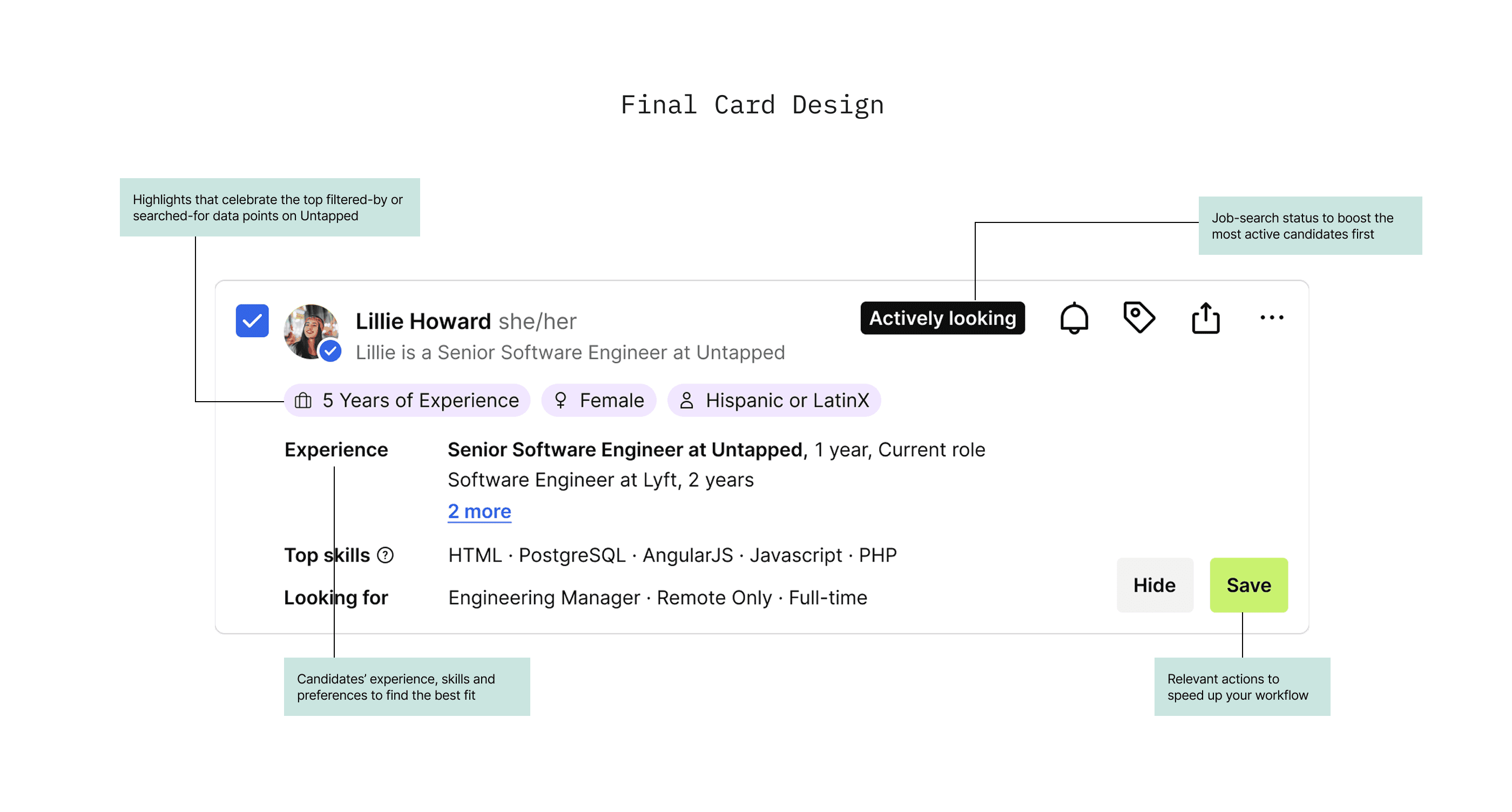
Legacy candidate cards didn’t scale and lacked the signal recruiters needed to make quick decisions.
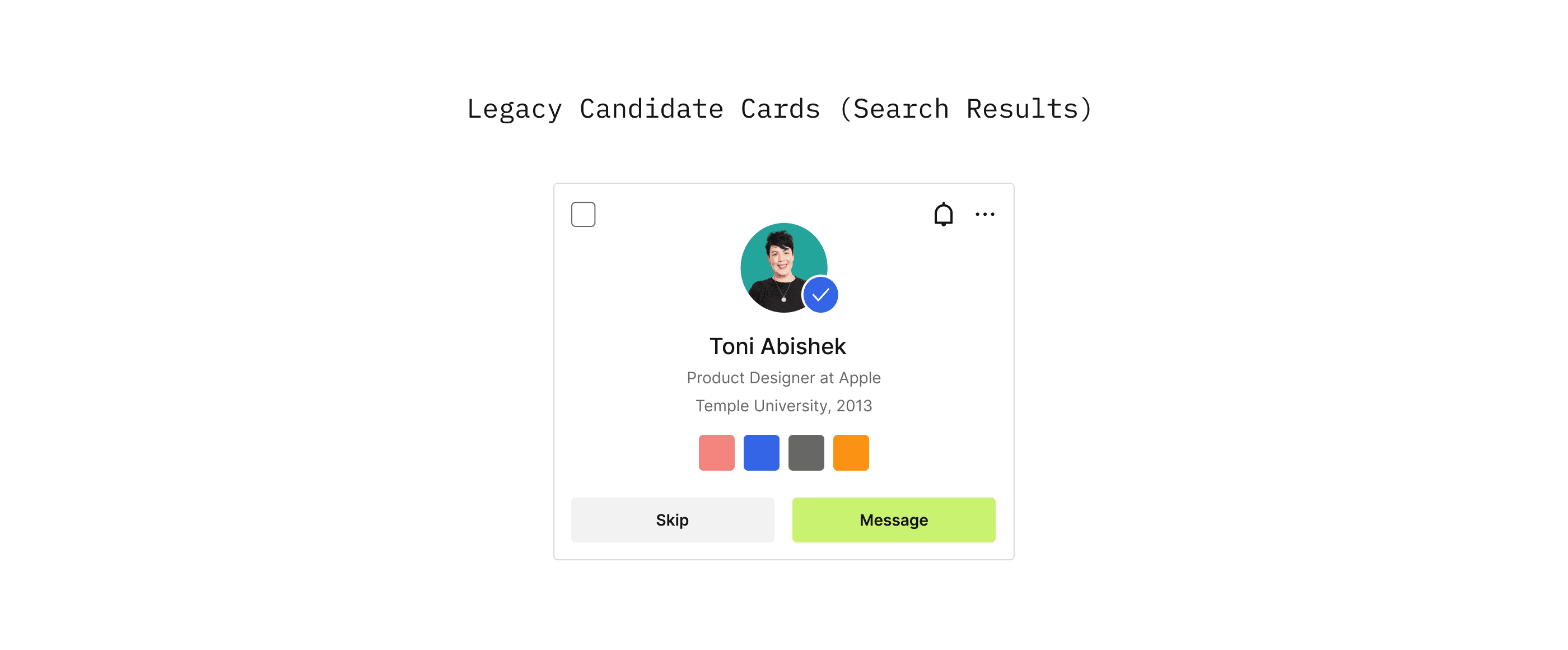
We came up with the following principles to ensure we still delivered value fast.
1️⃣ No page layout changes (high engineering cost)
Clearly explain why candidates are joining Untapped and guide them with clear, actionable cues.
2️⃣ Surface the most important recruiter signals
Add resume parsing to auto-fill profile details and speed up signup.
3️⃣ Highlight what makes Untapped unique: DEIB context
Test onboarding length to balance completion rates and data collection.
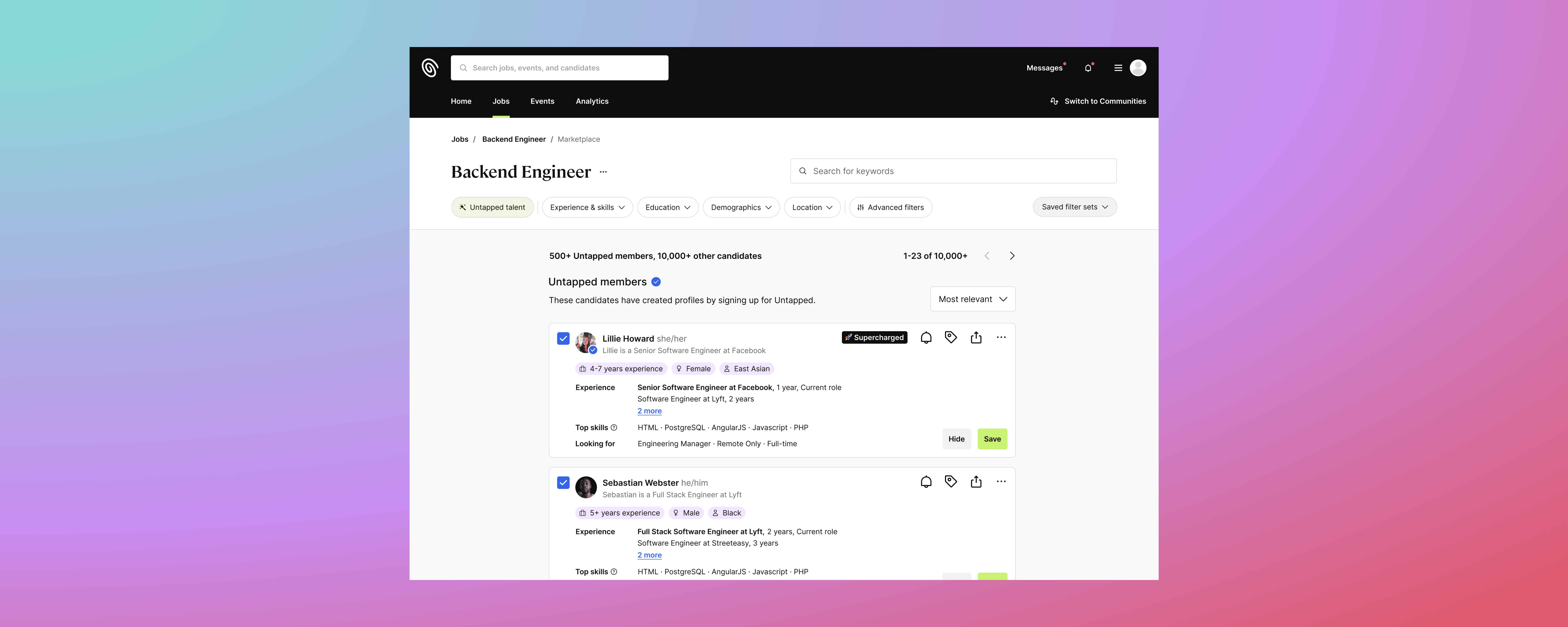
The design team explored multiple card concepts and tested two distinct directions with recruiters to evaluate usability, hierarchy, and information clarity.
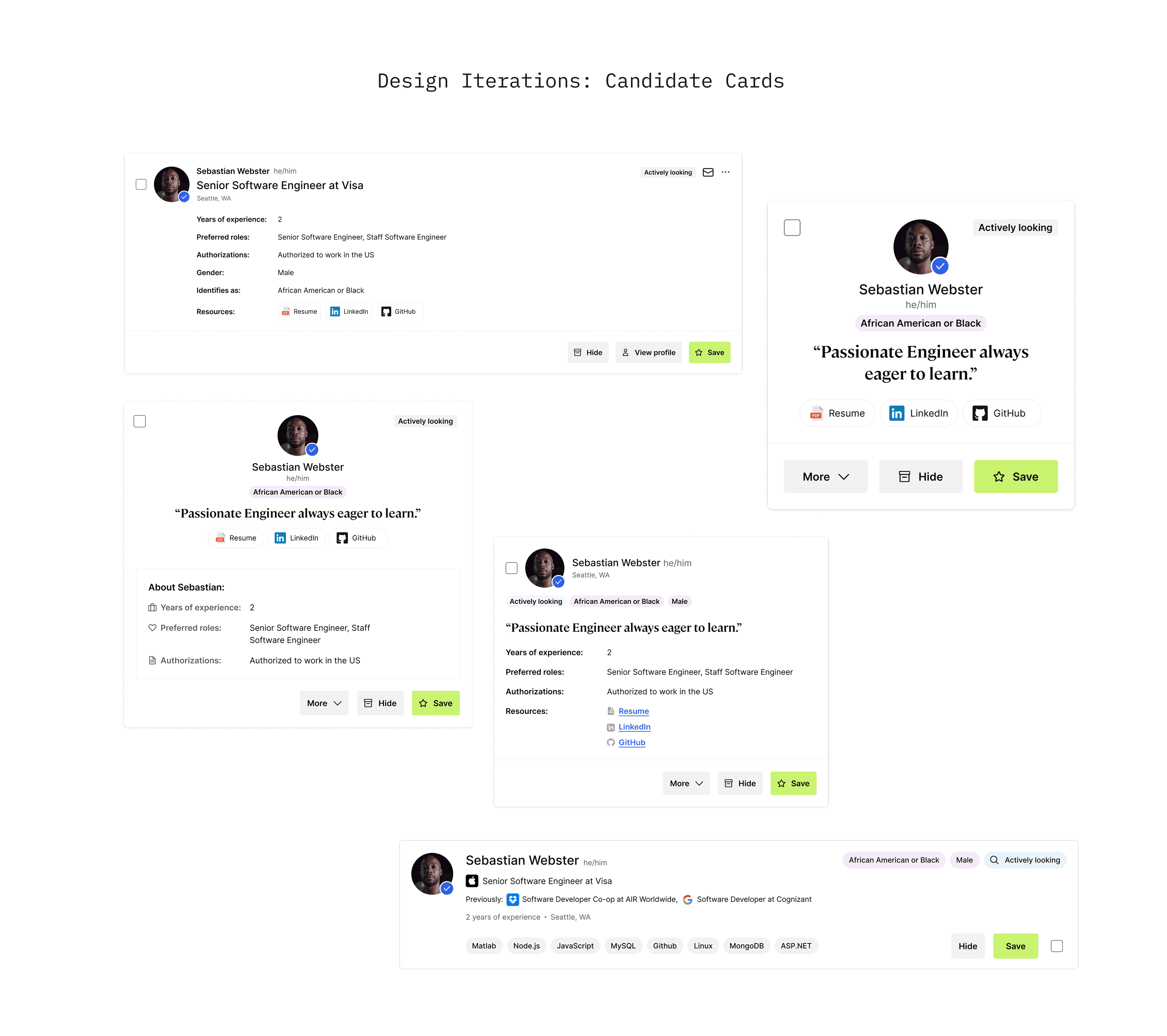
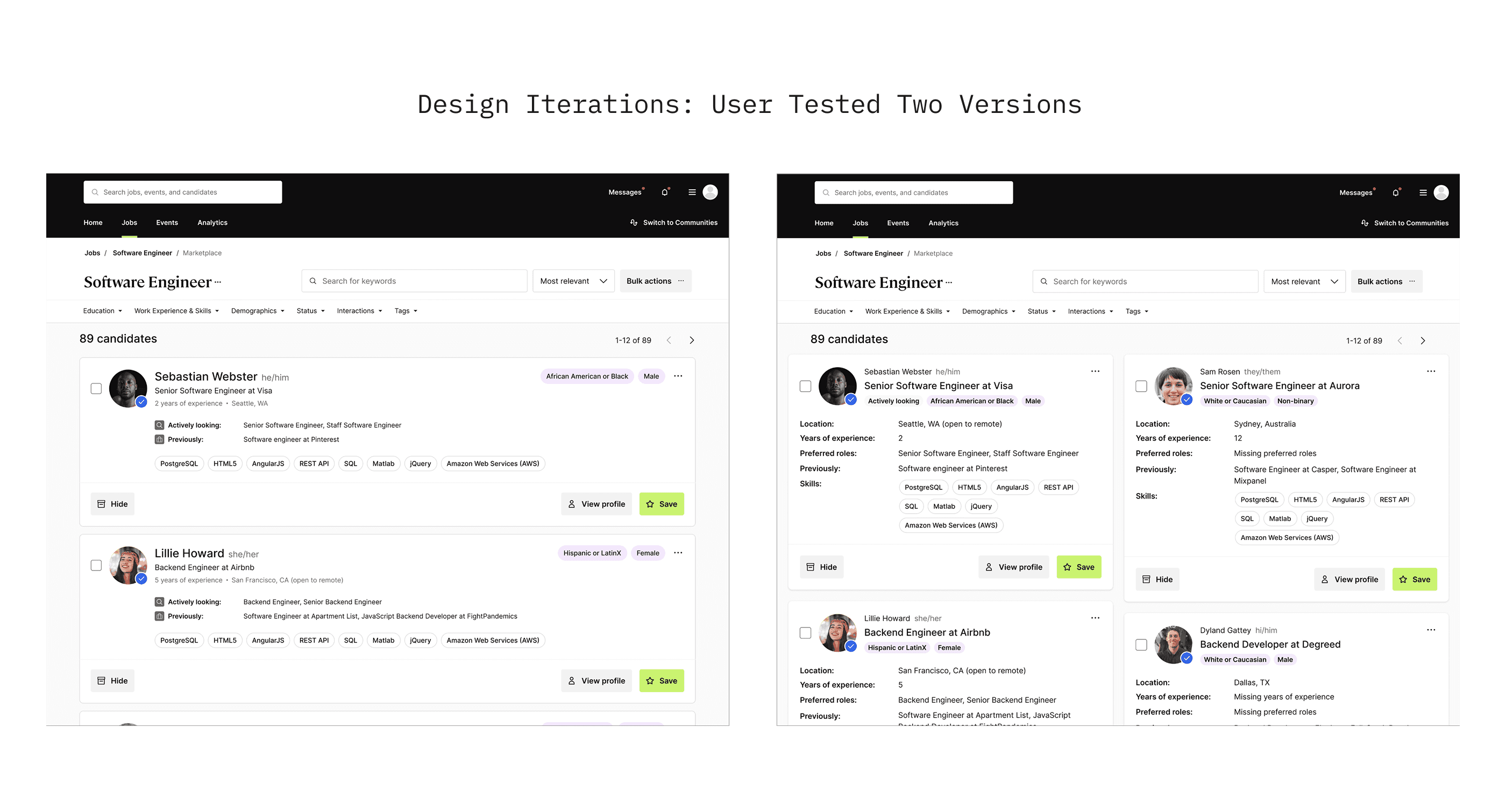
Insights from testing were synthesized into a single, system-aligned card design that improved scanability without requiring major engineering changes.
Phase 2: Search Infrastructure & Relevance
Search was slow, buggy, and ordered solely by signup recency—an approach that broke down as the marketplace grew from thousands to 1M+ candidates.
Migrating to Elasticsearch dramatically improved speed, reliability, and search accuracy.
We introduced the first relevance-based ordering model, moving beyond “most recent signup” to signals that better reflect candidate quality.
Strategy led to impact
Signup recency is a weak proxy for candidate intent or fit
Skills and experience are stronger indicators of recruiter success
Recruiter success = candidate engagement with outreach
🏆 7× marketplace performance — faster load times, fewer bugs, better search results
🏆 10× recruiter engagement — message response rates increased from ~2% to ~20%
Phase 3: Faster, Smarter Filtering
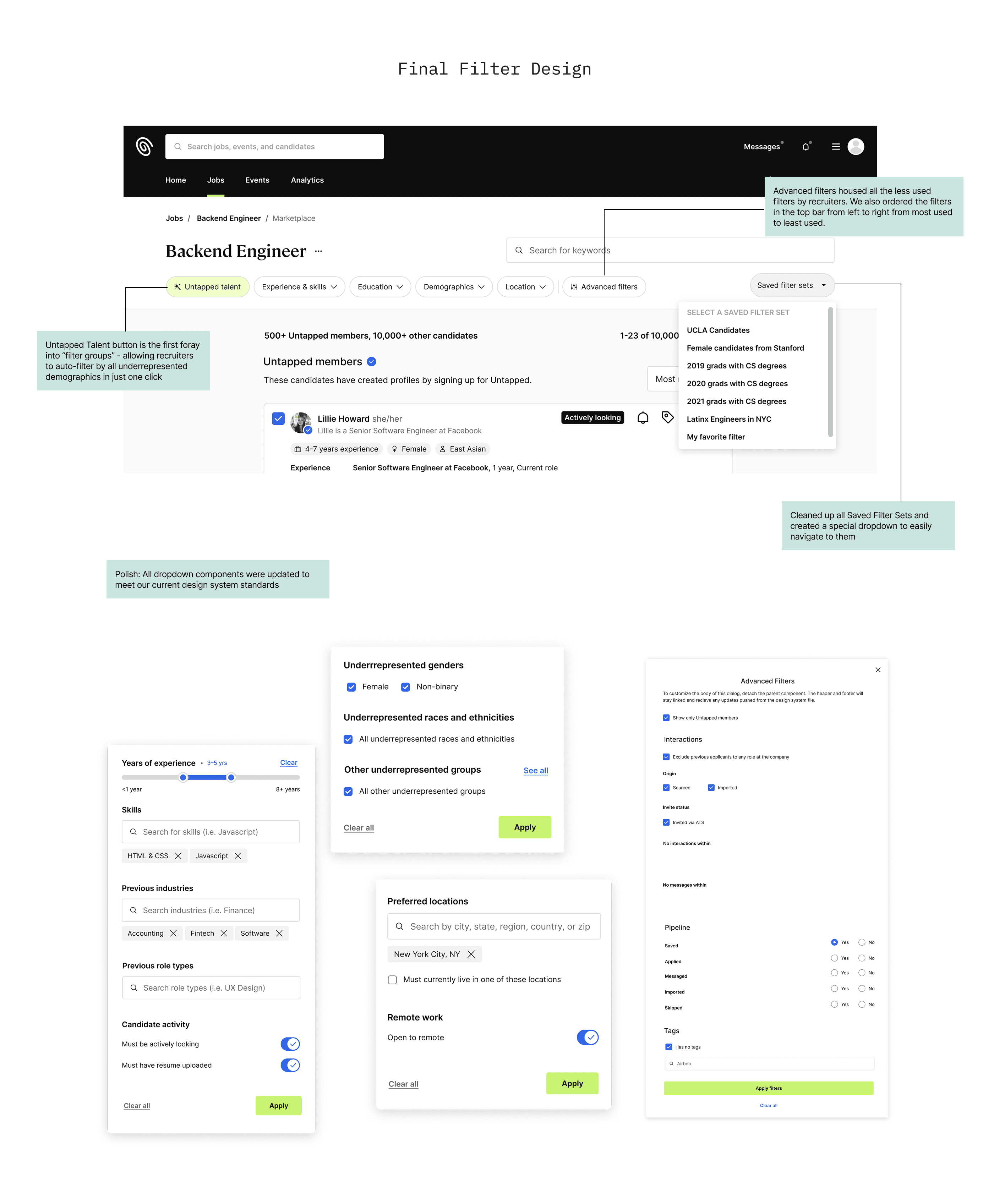
Filters were cluttered, inconsistent, and difficult to use—slowing down candidate discovery.
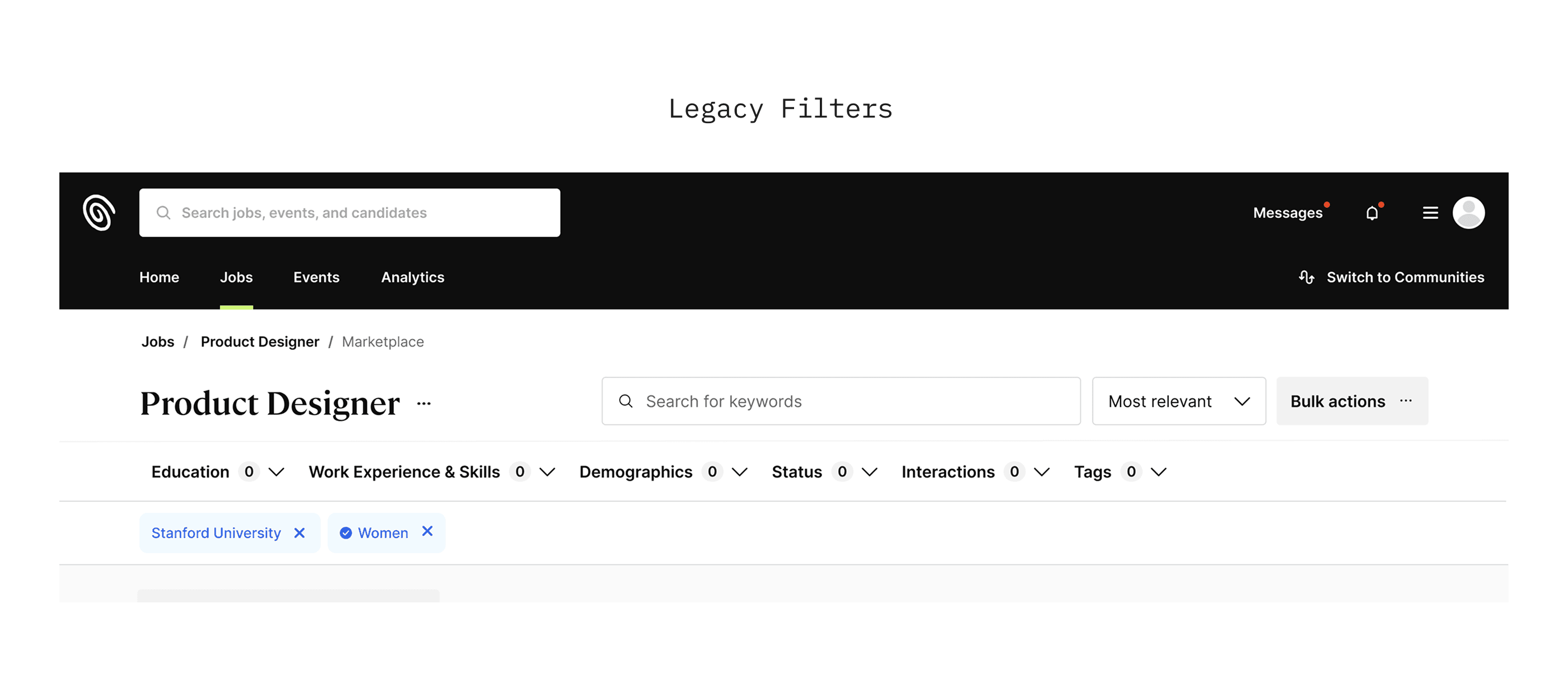
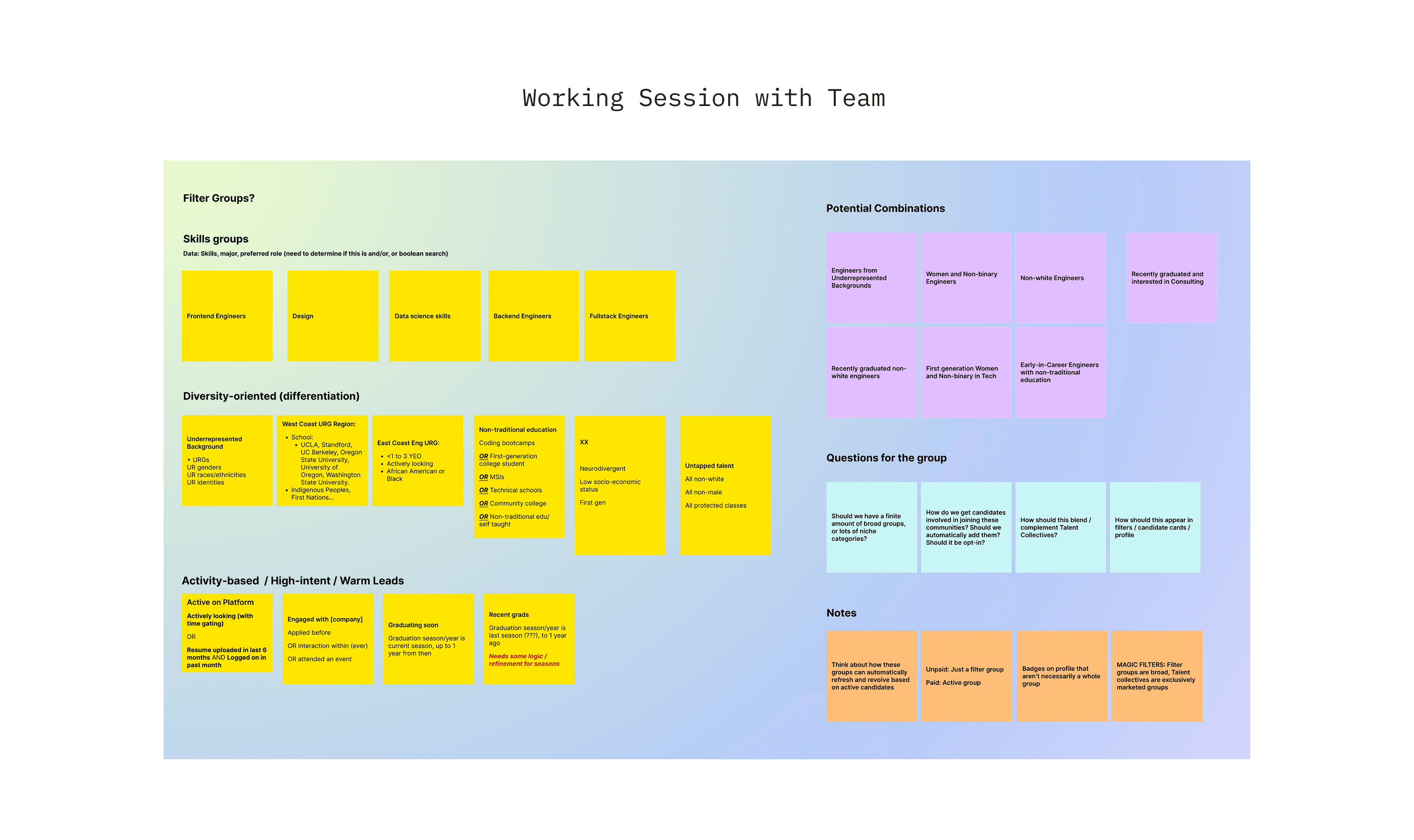
Using usage data and recruiter research, we regrouped filters by importance and frequency. While we explored larger structural changes (e.g., side navigation), we intentionally chose an iterative path with lower engineering cost.
We iteratively improved performance and UI while testing impact after each release. The biggest change was introducing an ordering algorithm that ranked roles based on:
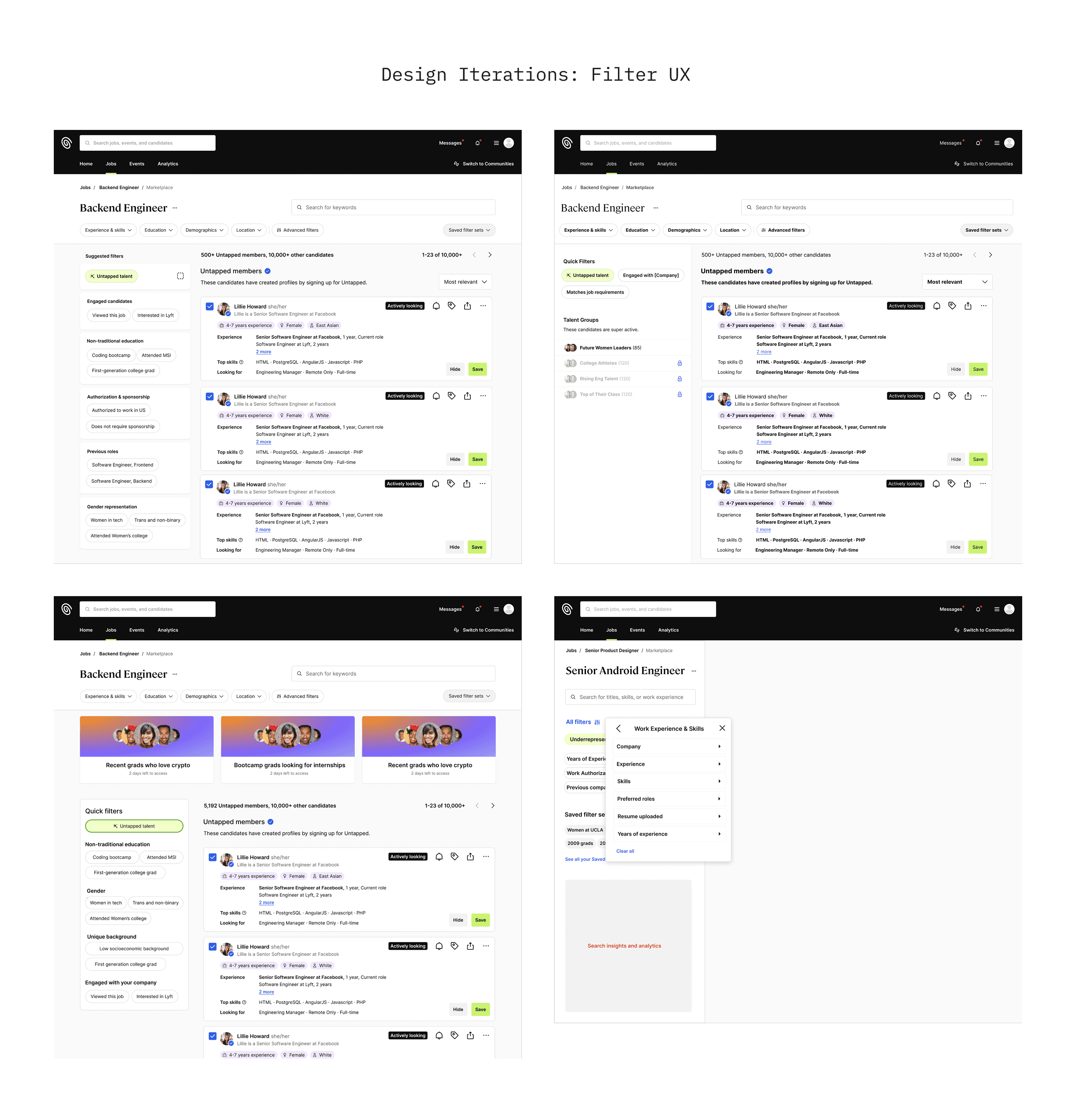
We kept filters in their familiar location but clarified hierarchy, ordering, and grouping—making it faster for recruiters to find relevant candidates without disrupting existing workflows.